Deploy
# Install
curl -fsSL https://raw.githubusercontent.com/pocketbasecloud/cli/main/scripts/install.sh | sh
# Login
pbc login
# Clone
git clone https://github.com/everlasting18/pocketbase-cloud-template && cd pocketbase-cloud-template
# Project
pbc project create aura && pbc project use aura
# Database
cd BE-pocketbase && pbc pocketbase deploy --new aura-pocketbase && pbc pocketbase info --name aura-pocketbase
# Frontend
cd ../FE-pocketbase && VITE_USE_MOCK_POCKETBASE=false VITE_POCKETBASE_URL=<your aura-pocketbase URL> pbc frontend deploy --new aura
Overview
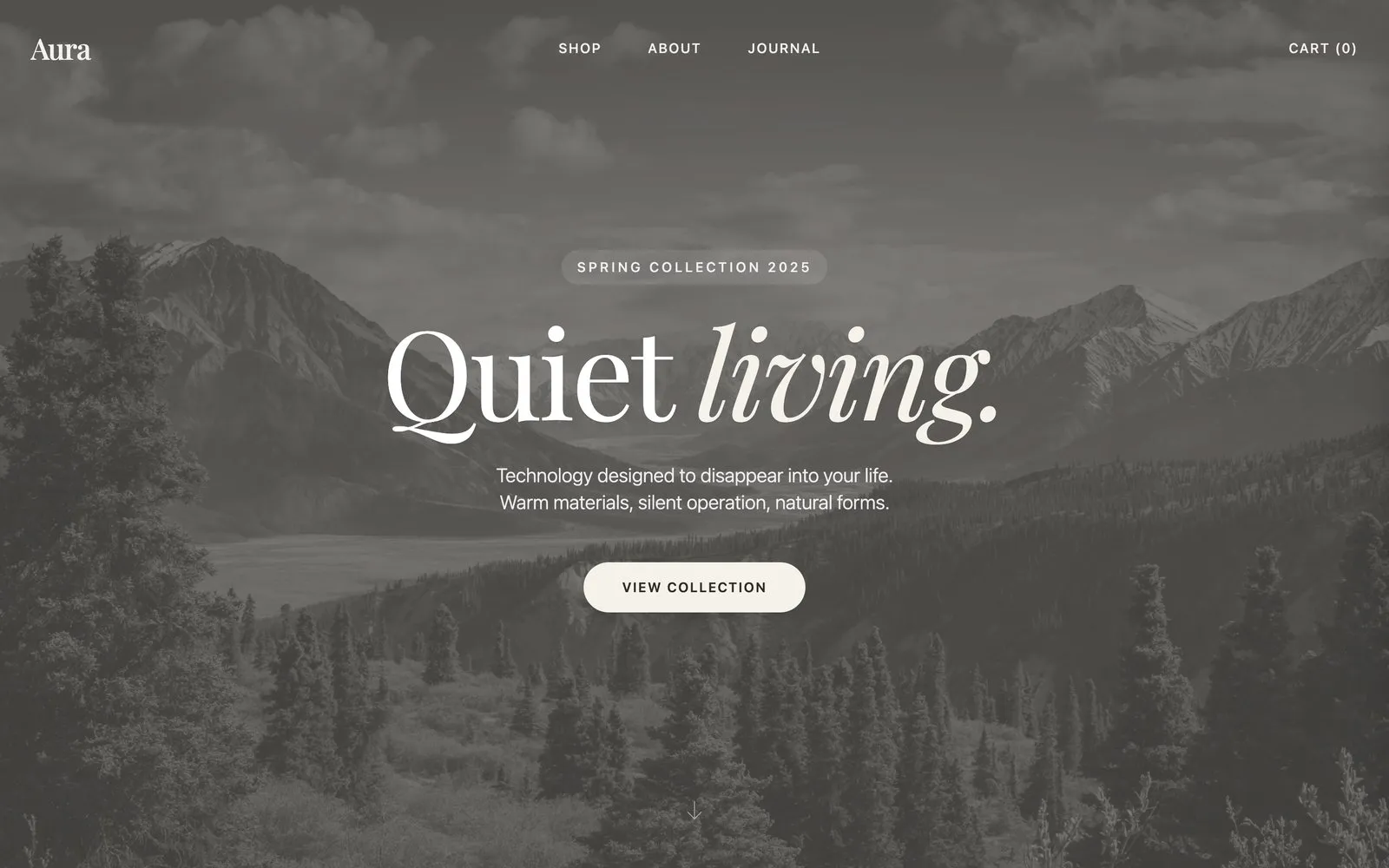
Aura is a small commerce site: a product catalogue with detail pages, a cart and
a checkout, and a journal. Behind /admin sits a dashboard for products, journal
articles, and orders, with image uploads and a rich-text editor. BE-pocketbase
is the database that backs all of it.
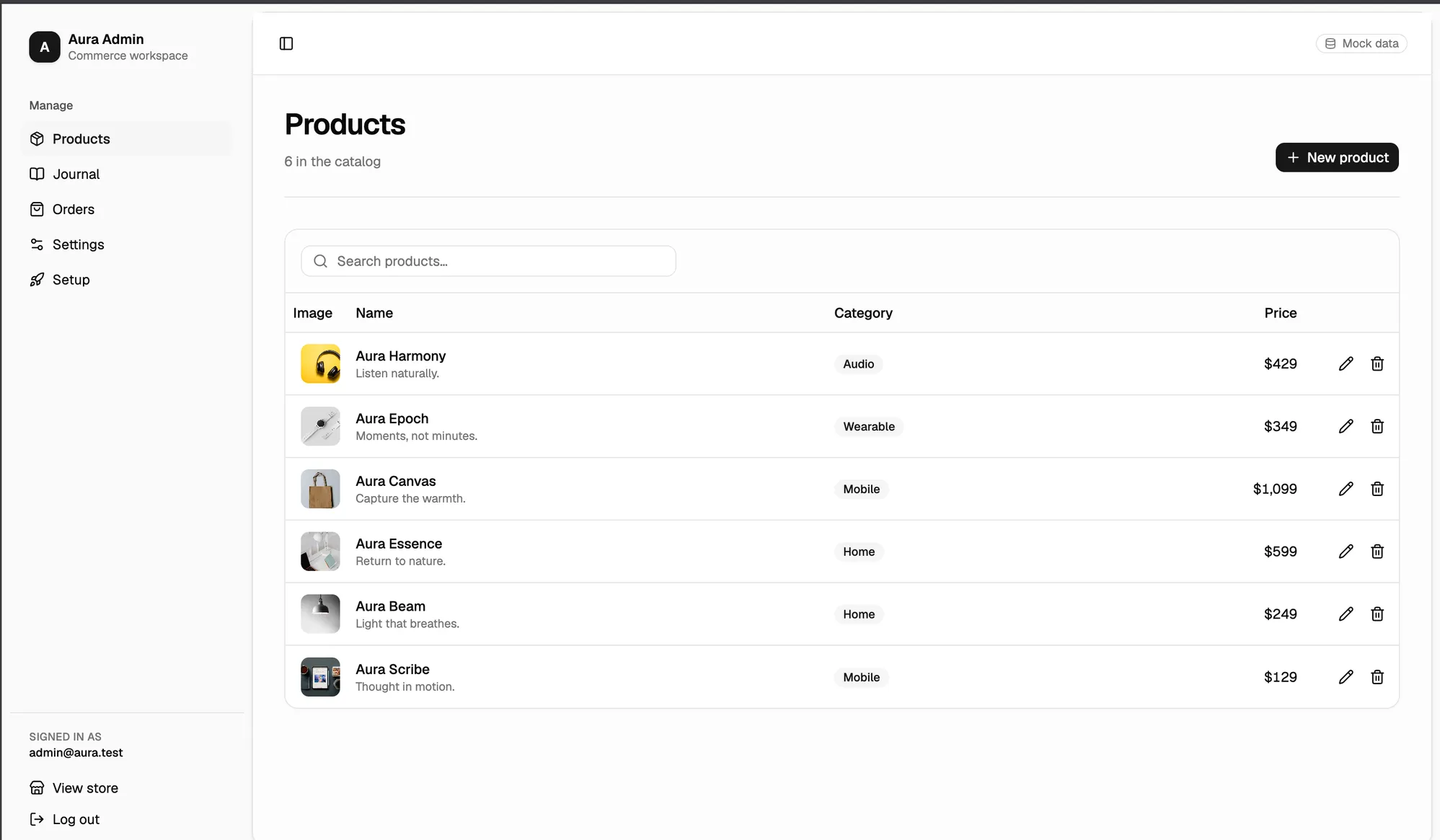
The frontend runs on bundled demo data out of the box, so you can open it before
any backend exists — the live demo runs in exactly that mode. A wizard at
/admin/setup then points it at your own PocketBase instance, imports the
collections, and seeds the sample catalogue.
Key features
- Storefront — home, product detail, cart, checkout, and journal, built with React 19, Vite, Tailwind CSS v4, and shadcn/ui components.
- Admin dashboard —
/adminlists and edits products, journal articles, and orders, with search, pagination, image and gallery uploads, and a TipTap rich-text editor. - Setup wizard —
/admin/setupconnects to a PocketBase URL, imports the three collections, and seeds the sample catalogue. Seeding skips records that are already there, so running it twice is safe. - Demo mode — with
VITE_USE_MOCK_POCKETBASE=truethe whole site runs on bundled data and browser storage, no backend required. - Three collections —
products,journal_articles, andorders. The catalogue is publicly readable, orders are create-only, and everything else is superuser-only. - One schema source —
FE-pocketbase/src/setup/collections.jsonfeeds both the wizard’s import and the generated migration, so the two never drift. - Append-only migrations —
bun run sync:schemawrites a new migration file rather than editing the one that already ran.
Template structure
pocketbase-cloud-template/
├── BE-pocketbase/           # deploy as a PocketBase instance
│   ├── pb_hooks/            # starter hook file
│   └── pb_migrations/       # generated from collections.json
└── FE-pocketbase/           # deploy as a static site
    ├── .env.example         # build-time variables
    ├── scripts/             # sync-schema and its tests
    └── src/
        ├── components/
        │   ├── admin/       # forms, tables, setup steps
        │   ├── cart/        # cart drawer
        │   ├── home/        # hero, about
        │   ├── layout/      # navbar, footer
        │   ├── product/     # card and grid
        │   └── ui/          # shadcn primitives
        ├── constants/       # demo products and articles
        ├── contexts/        # cart, catalog, admin auth
        ├── pages/           # storefront and admin routes
        ├── services/        # PocketBase client, mock, mappers
        └── setup/           # collections.json, wizard logic
1. Before you start
Install the pbc CLI and log in. The login opens a browser once and is
remembered afterwards.
curl -fsSL https://raw.githubusercontent.com/pocketbasecloud/cli/main/scripts/install.sh | sh
pbc login
The frontend uses Bun (the lockfile is
FE-pocketbase/bun.lock), and pbc installs dependencies with the package
manager the lockfile names, so have it available.
Both parts live in one project. Create it once and make it the default for this machine:
pbc project create aura
pbc project use aura
2. Deploy PocketBase
Deploy
BE-pocketbase/ holds pb_hooks and pb_migrations. Deploy it as a PocketBase
instance:
cd BE-pocketbase
pbc pocketbase deploy --new aura-pocketbase
--new creates an instance with that name and fails if the name is taken;
--name picks an existing one to redeploy. This first deploy links the
directory, so later deploys from it need neither.
It uploads the hooks and migrations and restarts the instance so they run: the three collections and their API rules exist as soon as it is up. When it asks about an env file, choose not to push one — this template needs none on the database.
The migrations create the schema but no records. Sample products and articles come from the setup wizard in step 4.
The pbc.json file
pbc.json tells the CLI what a directory is, how to package it, and which
resource it deploys to. The two pbc.json.example files carry only the part that
is the same for everyone:
{
  "pocketbaseVersion": "0.40.3",
  "build": {
    "pbHooks": "pb_hooks",
    "pbMigrations": "pb_migrations"
  }
}
{
"build": {
"command": "bun run build",
"outputDir": "dist"
}
}| Field | Meaning |
|---|---|
pocketbaseVersion |
The PocketBase version pbc local init downloads |
build |
What to package: pbHooks and pbMigrations for PocketBase; command and outputDir for the frontend |
The first deploy adds the rest — projectId, kind, defaultEnvironment, and
an environments block naming the resource it created — which is what later
deploys read instead of --name. Those ids belong to your account, so pbc.json
is listed in .gitignore and only the examples are committed. Don’t copy an
example into place: deploy once and let the CLI write the real file.
Get the URL and the superuser login
A new instance gets a superuser account with your account email and a generated password, printed once at the end of the deploy. Show the instance again at any time:
pbc pocketbase info --name aura-pocketbaseCopy the instance URL from that output — the frontend and the setup wizard both
need it. The PocketBase dashboard is the same URL followed by /_/.
Update the schema
The schema lives in FE-pocketbase/src/setup/collections.json. Edit that file
and regenerate the migration rather than writing one by hand:
cd FE-pocketbase
bun run sync:schema
It appends a new file to BE-pocketbase/pb_migrations — it never edits one that
has already run. Deploy again from the backend directory:
cd ../BE-pocketbase
pbc pocketbase deploy
New migrations are merged with the ones already on the instance and applied by the restart that follows.
3. Deploy the frontend
Build variables
The site reads two variables. Both are baked into the files at build time, so a change means a redeploy.
| Variable | Required | Purpose |
|---|---|---|
VITE_USE_MOCK_POCKETBASE |
Yes | true serves bundled demo data; false reads from PocketBase |
VITE_POCKETBASE_URL |
When not mocking | The aura-pocketbase URL from pbc pocketbase info |
.env.production is committed with demo mode on, so a deploy with no variables
set produces a working demo site. Pass them on the command line to override it.
Deploy
cd FE-pocketbase
VITE_USE_MOCK_POCKETBASE=false \
  VITE_POCKETBASE_URL=https://<id>.<compute>.pocketbasecloud.com \
  pbc frontend deploy --new aura
--new creates the site; a later deploy from this directory needs no flag.
The CLI installs dependencies, runs bun run build, uploads dist/, and waits
for HTTPS. Find the site address afterwards with:
pbc frontend info --name auraRedeploy
The first deploy links the directory in pbc.json, so from FE-pocketbase/ a
redeploy needs no name — only the build variables again:
VITE_USE_MOCK_POCKETBASE=false \
  VITE_POCKETBASE_URL=https://<id>.<compute>.pocketbasecloud.com \
  pbc frontend deploy
To avoid retyping them, put them in FE-pocketbase/.env.production; Vite reads
that file during the build.
4. Fill the database
The migrations create empty collections. Open /admin/setup on the deployed site
and work through the three steps:
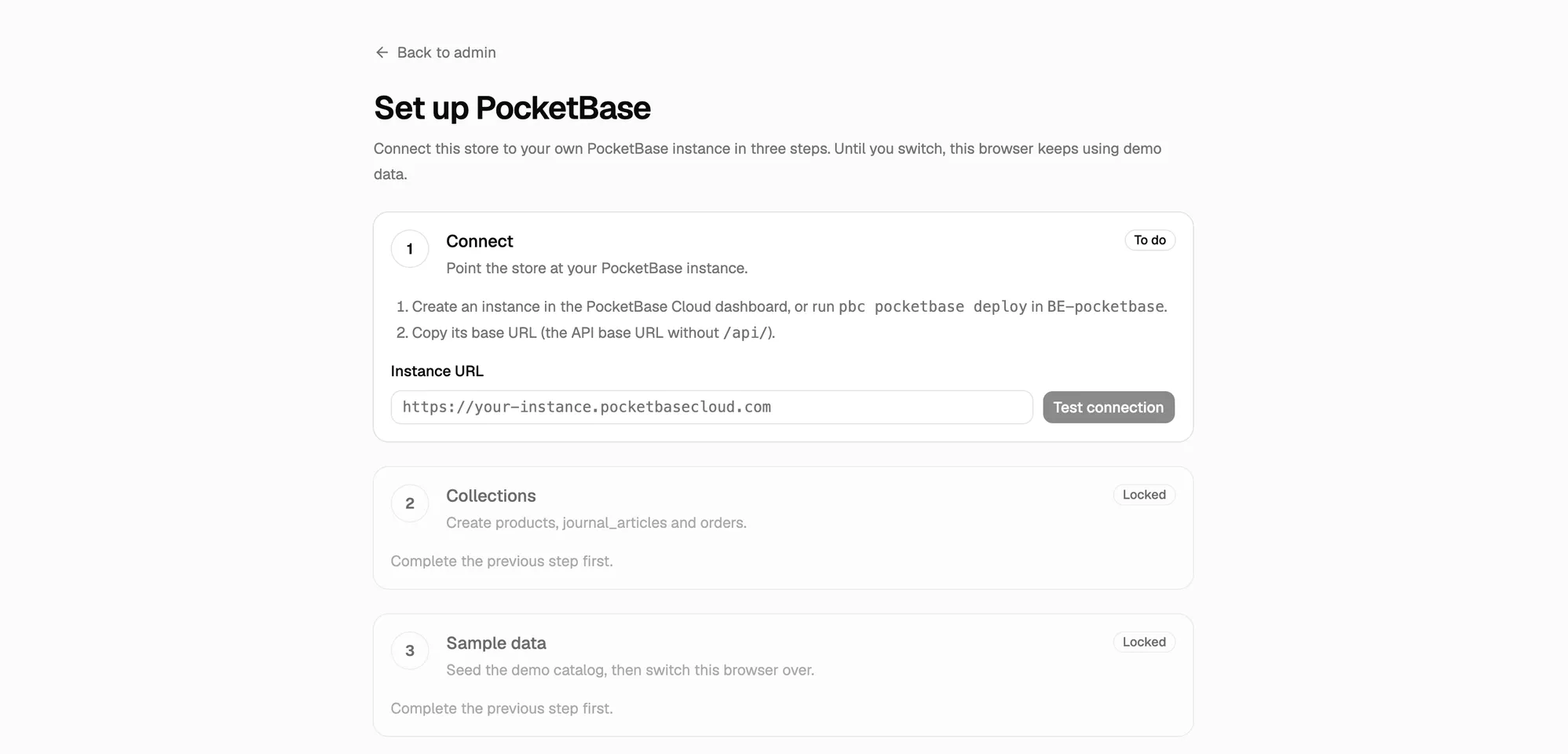
- Connect — enter the
aura-pocketbaseURL and the superuser login frompbc pocketbase info. - Import collections — pushes
collections.jsonto the instance. Skip it when the migrations already ran; the step reports what is missing. - Seed sample data — writes the demo products and journal articles. Records that already exist are left alone, so you can run it again.
The wizard also saves the URL in the browser it runs in. That is enough for your
own admin session, but visitors get the URL from the build, so keep
VITE_POCKETBASE_URL set when you deploy.
5. Run locally
pbc local init downloads a PocketBase binary for your machine and pins its
version in pbc.json. It never overwrites what is already there, so the hooks
and migrations are left alone.
cd BE-pocketbase
pbc local init
./pocketbase serve
serve applies the migrations in pb_migrations, so the three collections are
there on the first start. It prints a link for creating a local superuser; the
dashboard is at http://127.0.0.1:8090/_/.
In a second terminal:
cd FE-pocketbase
cp .env.example .env.local
bun install
bun run dev     # http://localhost:3000
.env.local starts in demo mode. Set VITE_USE_MOCK_POCKETBASE=false and
VITE_POCKETBASE_URL=http://127.0.0.1:8090 in it to read from the local
instance, then open http://localhost:3000/admin/setup to seed the sample data.
Other scripts:
bun run build   # production build
bun run lint    # type check
bun test        # tests
CLI commands used here
| Command | What it does |
|---|---|
pbc login |
Log in to PocketBase Cloud |
pbc project create aura / pbc project use aura |
Create the project and make it the default |
pbc pocketbase deploy --new aura-pocketbase |
Deploy BE-pocketbase/ as a new PocketBase instance |
pbc pocketbase info --name aura-pocketbase |
Instance URL and superuser login |
pbc frontend deploy --new aura |
Build and deploy FE-pocketbase/ as a new static site |
pbc frontend info --name aura |
Site URL |
pbc local init |
Download a PocketBase binary for local development |